


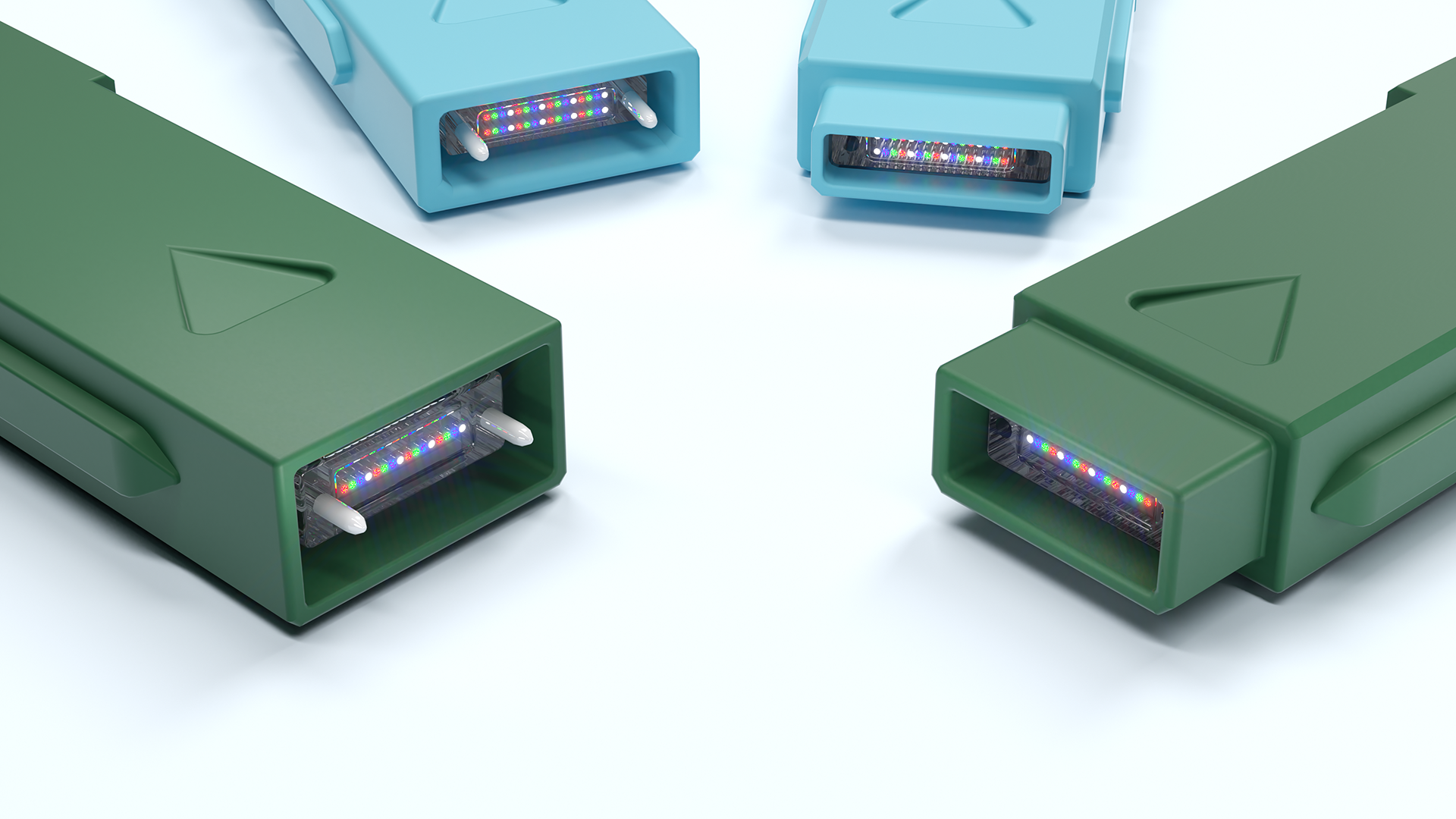
MOC Series Connectors
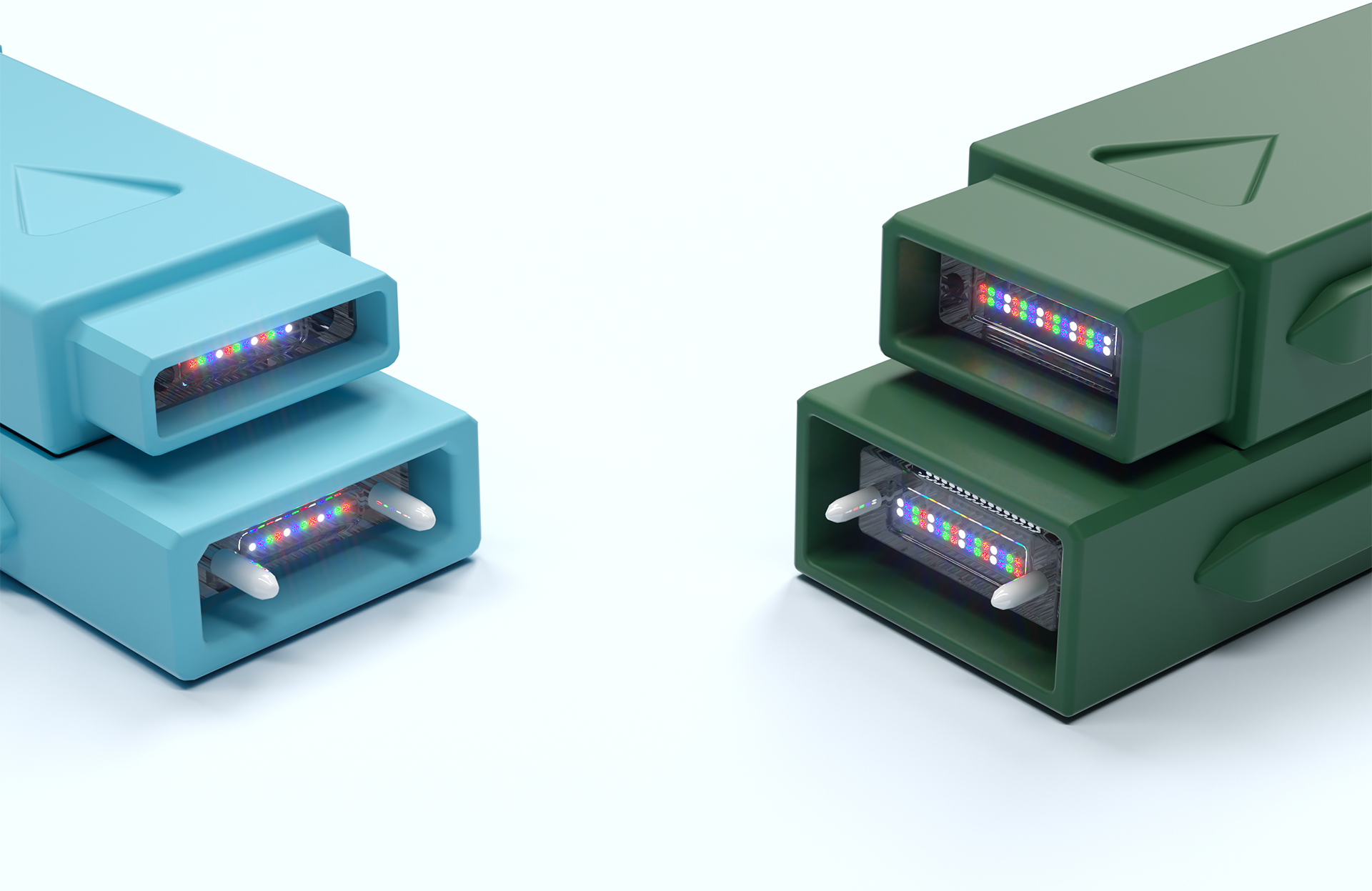
MOC Series
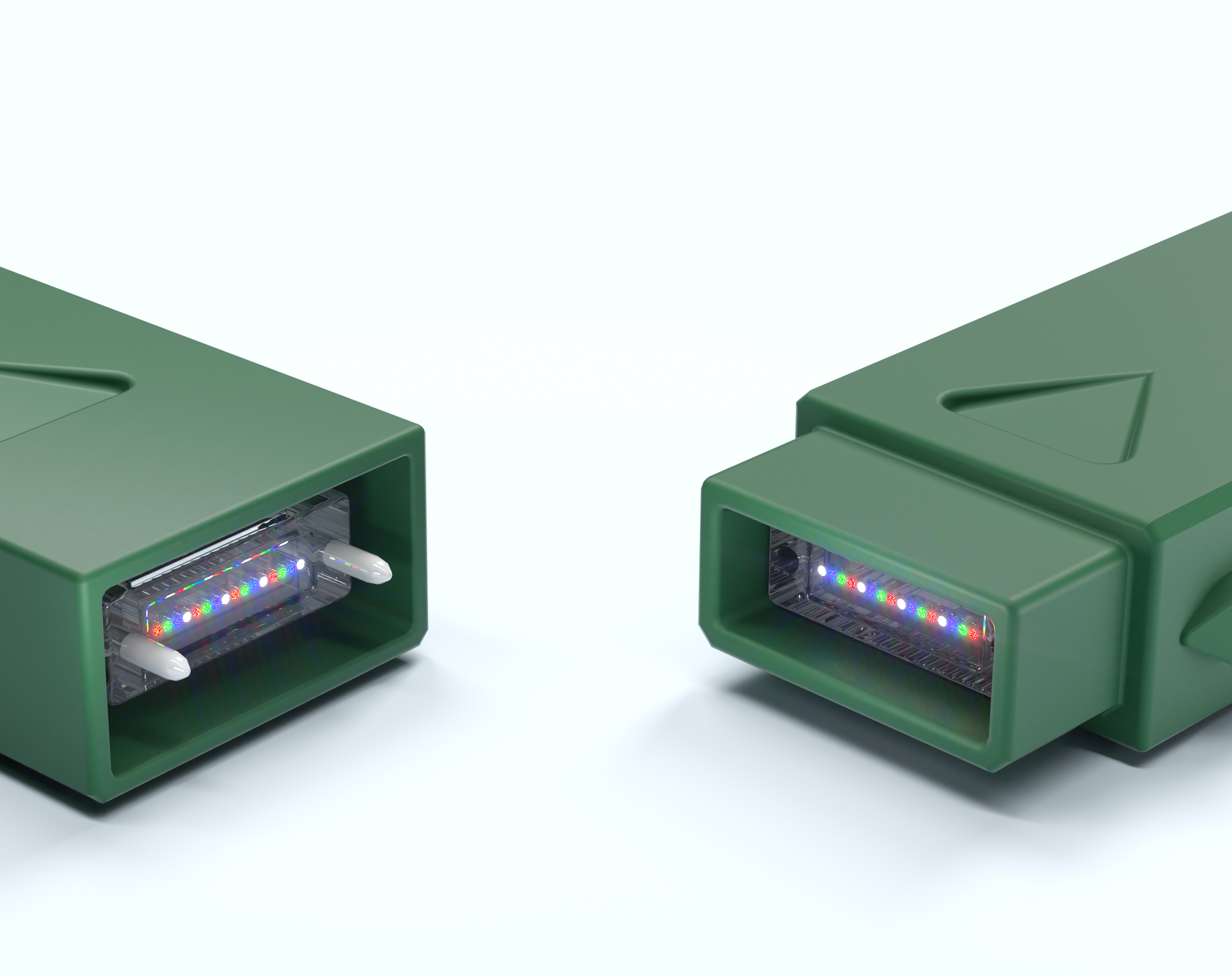
The MOC connector is Kyomori-Ka’s latest optical communication product; optimized for direct equipment connection, it delivers a robust interface with high debris resistance. It supports stacked optical fiber ribbons, and its 64-channel design enhances fiber density and spatial efficiency, with future versions set to accommodate single/multi-port and front/backplane configurations.
◆Achieve up to 48 channels using stacked 12-channel ribbon fibers, or up to 64 channels using stacked 16-channel ribbon fibers. Capable of terabit-per-second bandwidth: 64 single-mode fibers at 25 Gbit/s equals 1.6 Tbit/s per connector.
◆The product is compact and dense; due to the minimal number of components and the fact that fiber polishing is not required during assembly, the cost is lower.
◆The alignment tolerance for the connector mating plane is generous, thereby ensuring consistently low insertion loss and return loss.
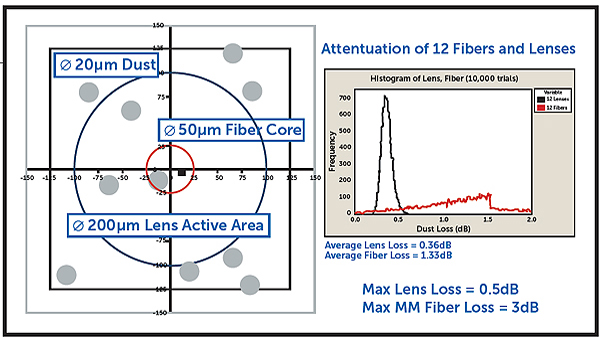
◆Expanded beam technology significantly reduces signal sensitivity to debris.
◆Low insertion force facilitates high-volume mating in high-density applications.
◆Stacked ribbon configuration increases density and maximizes space efficiency.
◆Available in jacketed or bare ribbon configurations.
◆A spring force of 3.1 N is sufficient.
An invention patent is currently pending—stay tuned!
Product Purpose:



●Servers and Storage
●Data Center and High-Performance Computing Environments
●Broadcasting and Media Industry
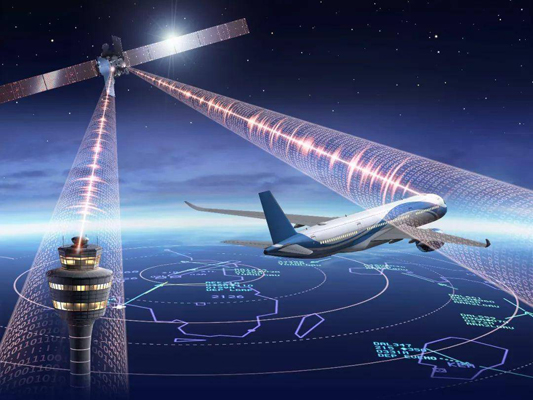
●Aerospace and Military Communications
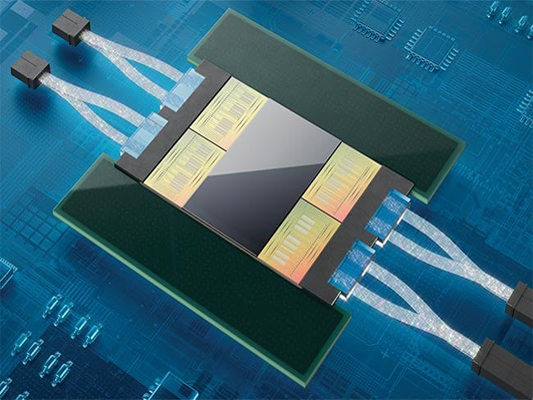

●COP Co-Packaged Optics and On-Board Connectivity
●Industrial Automation
●Telecommunications Network
●High-Bandwidth Transceiver
Download:
Product Specifications
Product Features
 |
 |
 |
|
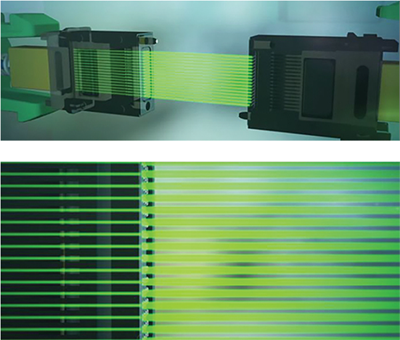
1. The alignment precision requirements for the optical interface are relaxed. A 3 μm misalignment in a single-mode fiber (1310 nm wavelength, MFD 9.2 μm) results in 1.8 dB of attenuation, whereas an expanded-beam interconnect (90 μm collimated beam spot, Gaussian distribution) experiences only 0.01 dB of attenuation for the same misalignment; this relaxation of precision standards offers new options for precision alignment. 2. Free-space interconnection eliminates the need for physical contact between fiber end-faces; by removing the need for end-face structure control, simplifying the manufacturing process, and reducing mating pressure, it significantly lowers the cost of high-density multi-fiber interconnection. 3. Spreading the signal over a larger area minimizes the impact of signal obscuration and attenuation caused by physical contact losses, thereby reducing the effects of debris. |
||
|
◆Initial Data (Clean MT Ferrule) 36 Lenses. MAX IL = 0.64dB AVG IL = 0.54dB |
||
 |
||
|
◆Oil-Contaminated MT Ferrule 32 Lenses Contaminated 10-25% (15):MaxΔIL = 0.27dB AverageΔIL = 0.07dB 25-50% (9):MaxΔIL = 0.56dB AverageΔIL = 0.16dB 50-75% (8):MaxΔIL = 0.74dB AverageΔIL = 0.42dB |
||
 |
||
|
◆AZ Dust Pollution 36 Lenses Were Contaminated 10-25% (25):MaxΔIL = 0.57dB AverageΔIL = 0.11dB 25-50% (6):MaxΔIL = 0.50dB AverageΔIL = 0.31dB 50-75% (5):MaxΔIL = 1.09dB AverageΔIL = 0.60dB |
||
 |
||
| ◆Cleaned MOC Ferrule 72 Lenses After Cleaning. MaxΔIL = 0.07 dB; AverageΔIL = 0.02 dB | ||
 |
||